
















It can measure eccentricity, concentricity, wall thickness, diameter, ovality, and lump/neckdown defects.

English
Wire and cable production can be affected by dies, tension, and material conditions, causing diameter variation, eccentricity, uneven wall thickness, and surface defects.
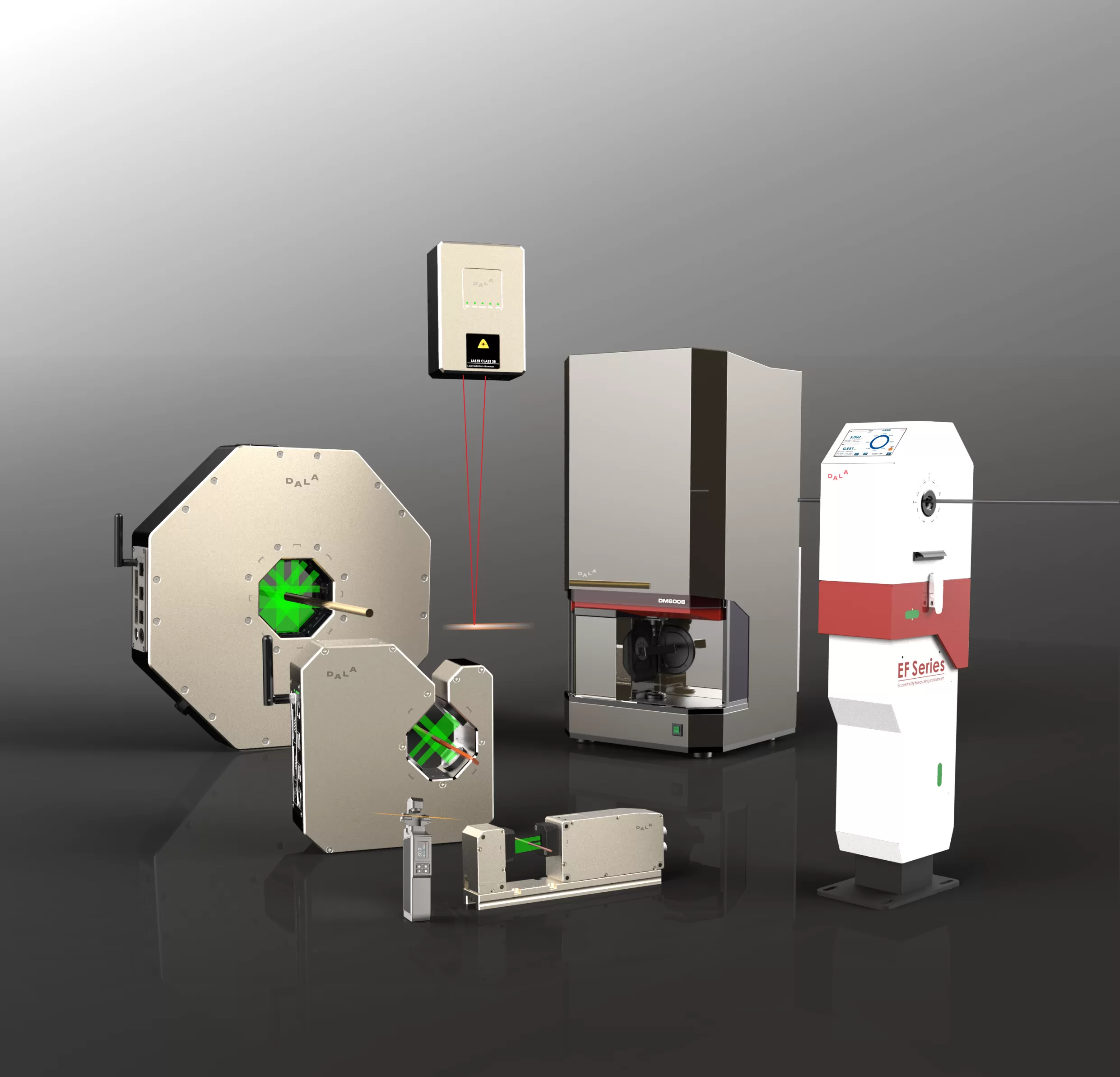
DALA Metrology provides in-line solutions for diameter, lump and neckdown, eccentricity, surface defect, and length measurement to support process control and quality inspection.

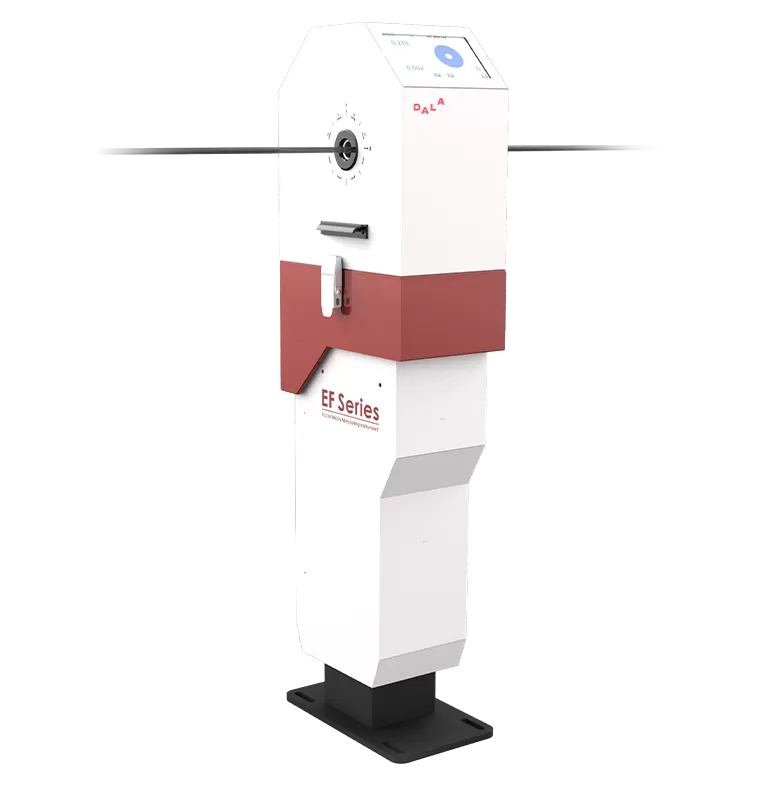

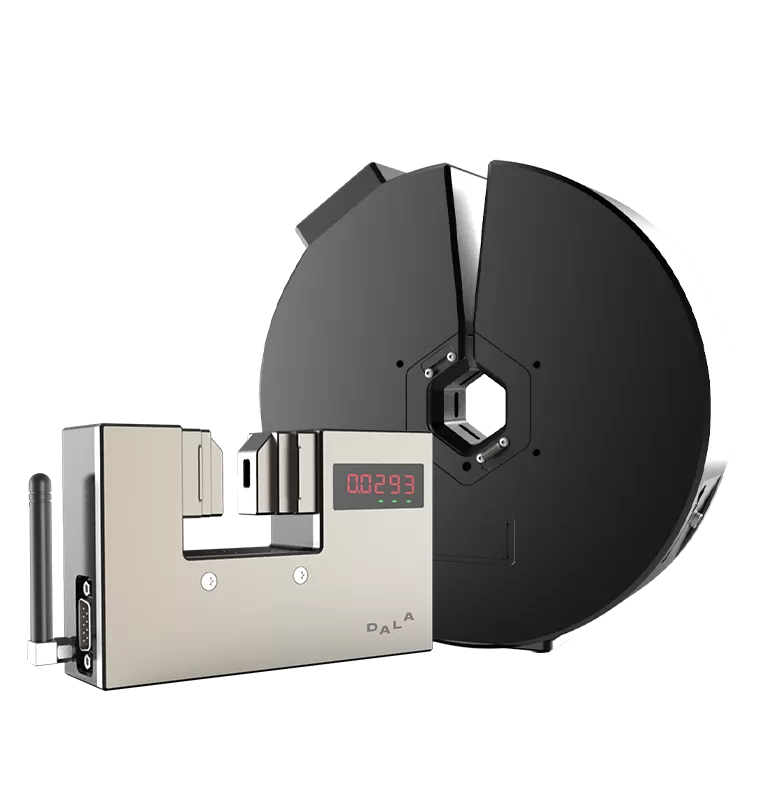
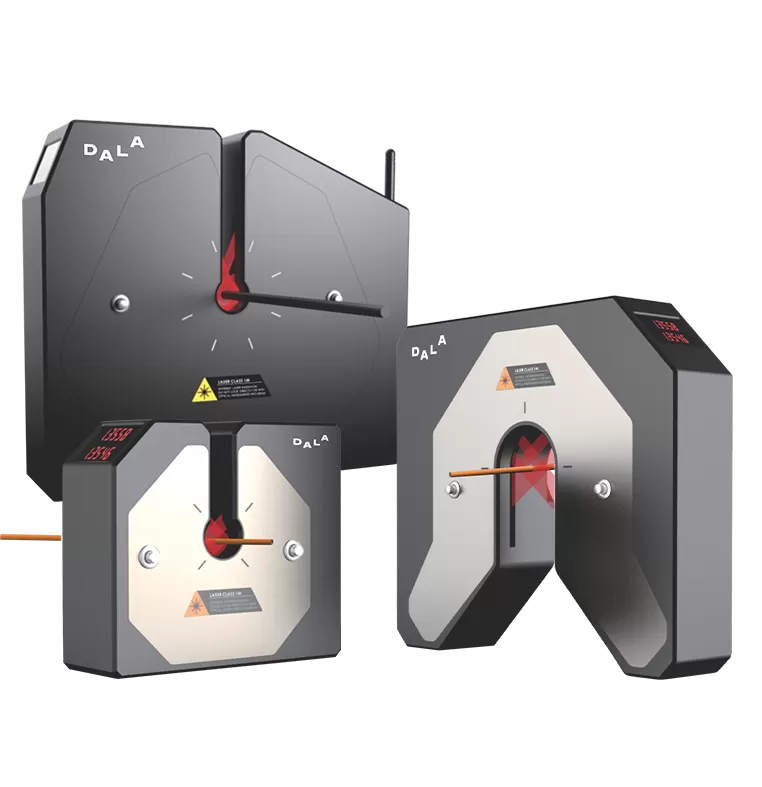
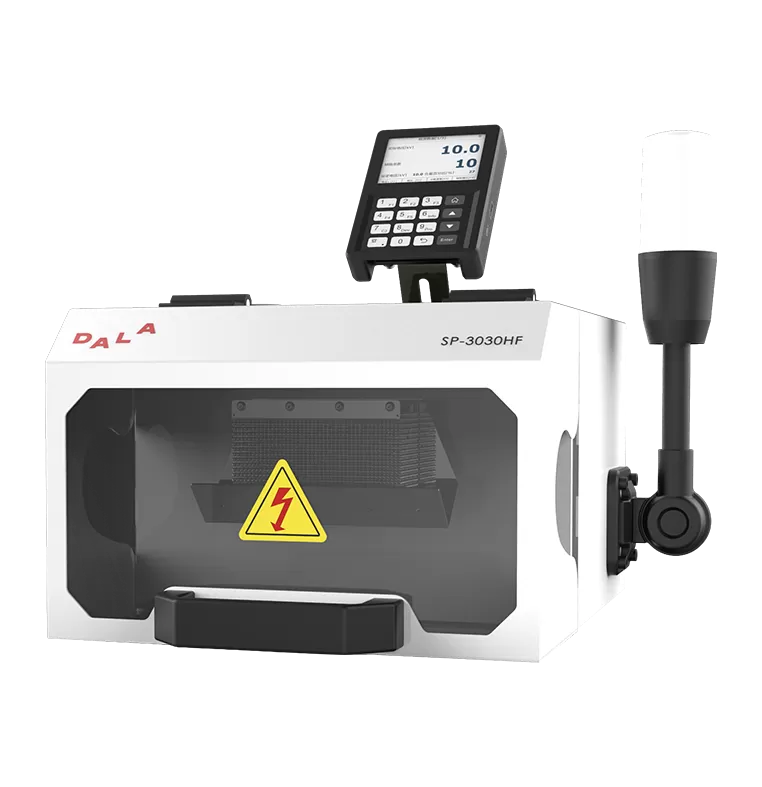

It can measure eccentricity, concentricity, wall thickness, diameter, ovality, and lump/neckdown defects.
More Communication Interfaces
Equipped with RS485, Bluetooth, Wi-Fi, and Industrial Ethernet. Many domestic products support only two communication interfaces.
C3 Touchscreen with More Functions
Supports voltage adjustment, 2-level sensitivity, defect resolution settings, and automatic classification of pinhole and bare-wire defects. It also displays defect count, defect position, line speed, voltage calibration, and user access levels. Many domestic products use only buttons and digital displays, showing mainly voltage and defect count.
Customizable I/O Signals
Supports 8 categories of digital inputs and outputs, configurable for functions such as high-voltage start/stop, defect reset, defect limit alarms, and equipment fault alarms. Output duration and frequency can also be customized.
Bluetooth Remote Control by Mobile Phone
All C3 touchscreen functions can be operated remotely via Bluetooth on a mobile phone.
Adjustable Time Resolution
Time resolution can be adjusted from 1 ms to 2 s. Higher time resolution helps reduce missed defects, while many domestic products do not offer this adjustment.
Yes. Several DALA models support both outer diameter and ovality measurement, including the E3 ultra-fine wire gauge, F Series, TL-2000 Series, and TL-3000 Series.
The system has minimum size requirements for the measured product. Currently, the smallest verified cable diameter is 0.2 mm.
Yes. DALA systems are already used in a variety of fixed-length cutting applications and support output signals such as pulse and digital outputs to work with cutting machines.
The final configuration should be confirmed based on line speed, accuracy requirements, cutting method, and on-site conditions.
Line speed does not directly reduce eccentricity measurement accuracy. However, it affects the cable length represented by the displayed value through the averaging time, which may influence comparison with cut-sample measurements.
For example, at a line speed of 600 m/min and an averaging time of 2 s, the displayed value represents approximately 20 m of cable. Therefore, when comparing online results with laboratory cut samples, sampling should match the averaging time, while also considering positional variation of the cable at high speed.
No. A spark tester cannot replace withstand voltage or insulation resistance testing.
Spark testing is mainly used for fast in-line screening to detect physical insulation defects such as pinholes or breaks. By contrast, withstand voltage and insulation resistance tests apply voltage for a longer period and are used to evaluate the cable’s overall insulation performance, breakdown resistance, and material quality before final delivery.
The eccentricity measurement system is suitable for round single-core wires and multi-core cables with an approximately round core structure. Typical applications include coaxial cables, LAN cables, and automotive wires.
Provides end-to-end support from product selection to production line operation through on-site guidance and after-sales technical support.